What do crab traps look like and how do they work?
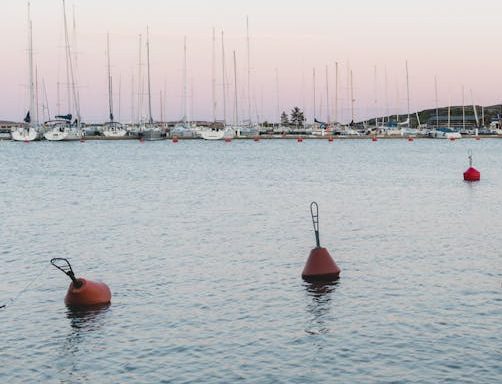
When you are kayaking, boating or dining on Hilton Head Island’s waterways, you may see some unidentified floating objects. Sometimes they are in a row, sometimes just randomly floating on the surface of the water. So what are these things? Well, they are not trash. They are crab trap buoys.
Crab trap buoys are attached to crab traps and are an essential piece of gear for any crabber. They serve two primary purposes. Visibility: Their bright colors make them easy to spot from a distance. Identification: Each buoy can be marked with unique identifiers, helping you distinguish your traps from others. They are made from high-density foam or durable plastic to withstand harsh marine environments.
Local crabbing can be a leisure or a commercial endeavor.
The traps, also known as crab pots or crab cages, are typically made out of mesh and have a pyramid shape with four sides. The top of the trap is open, allowing crabs to enter through the funnel-shaped entrance. Once inside, they can’t escape due to the inward-facing wires that prevent them from crawling back out. Some crab traps also have bait bags inside to attract crabs into the trap.
One important feature of these traps is the escape rings. These are openings on each side of the trap that allow smaller and undersized crabs to exit while trapping larger ones. This helps sustain the blue crab population by allowing smaller crabs to continue growing and reproducing.
Crab traps are set in shallow waters, typically around marshes, bays, or channels where crabs are known to live. These traps are not only effective at catching crabs but they also have minimal impact on the environment. They do not damage the ocean floor like other fishing methods such as trawling or dredging, making them a more sustainable option for crab harvesting.
What you need to know before you go crabbing.
A license is necessary for crabbing with a trap or pot, but you can crab using up to three drop nets, fold-up traps, or hand lines without one. For using up to two pots, a saltwater recreational fishing license is needed, while a commercial license is required for more than two pots.
You’re allowed to catch up to one bushel of crabs per person each day or two bushels per boat. The prime time for harvesting large, heavy crabs typically runs from October to December. Large male crabs are usually found in rivers and creeks, whereas mature females tend to be near the ocean. It’s important to note that female crabs carrying an egg mass, known as sponge crabs, are legally protected in South Carolina and must be released back into the water if caught.
Want to try crabbing? Check out one of the following websites:
Sport Crabbing Adventure aboard the Crabber J
Captain Kidd Sport Crabbing Adventure
So next time you enjoy a plate of steamed crabs, you’ll have a better understanding of how they ended up on your table. If you’re interested in trying out this traditional method of crabbing give it a try. Happy crabbing!